The problem
Why this needed to exist.
Digital-asset platforms already use identity, authentication, address screening, and blockchain intelligence, but customers can still receive a generic warning or step-up prompt without understanding what changed, why it matters, or which safer action is available.
Defining decision
Narrow the concept to one outbound EVM-asset transfer workflow and make deterministic policy, plain-language explanation, user choice, host-owned step-up authentication, and an auditable decision record the core product loop.
Approach
How the system was shaped.
- Separated the cautious customer, authorized signer, platform buyer, and technical stakeholders, then reframed a broad security concept around one high-consequence decision point.
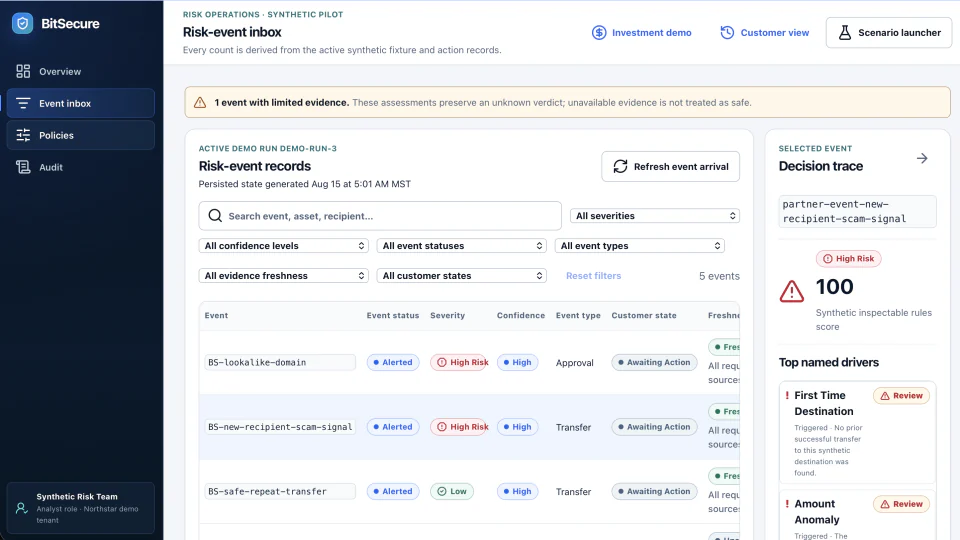
- Defined an event-to-decision contract that validates approved context, applies versioned rules, explains the result, offers proportionate choices, invokes host-owned verification when required, and records the outcome.
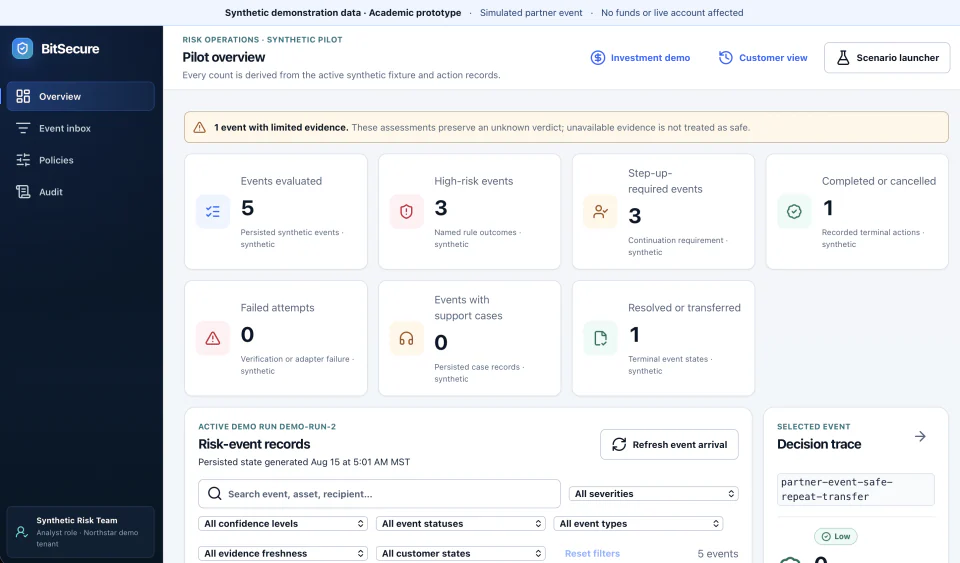
- Designed linked customer and operator prototype flows with synthetic fixtures, reason codes, decision traces, degraded-state behavior, proposed metrics, and explicit continue, pivot, and stop criteria.
Tradeoffs
What the design chooses—and gives up.
- BitSecure coordinates existing identity, intelligence, authentication, and policy capabilities instead of claiming custody, execution authority, or a proprietary detection advantage.
- Deterministic synthetic scenarios make the prototype inspectable and repeatable, but they do not prove partner integration quality, user comprehension, loss reduction, or commercial demand.
Evidence
What can be inspected.
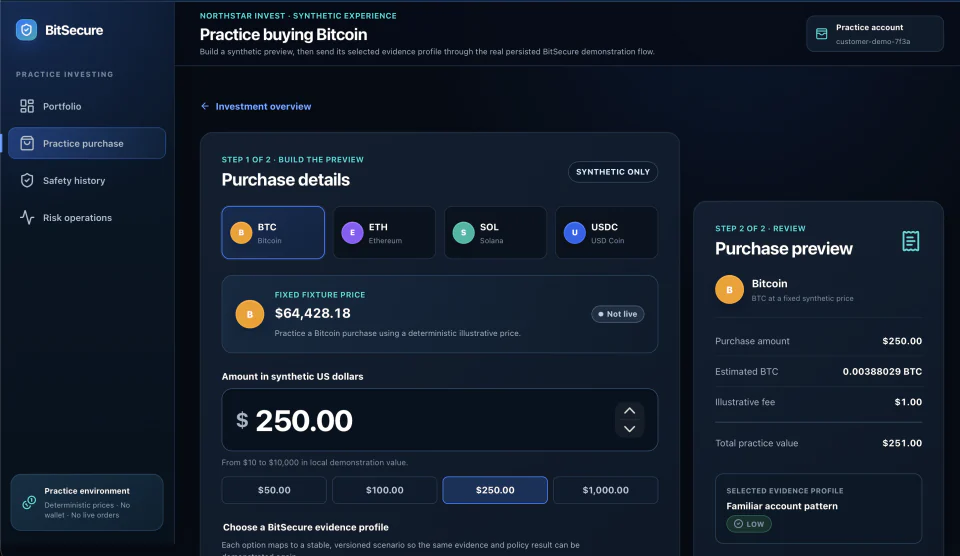
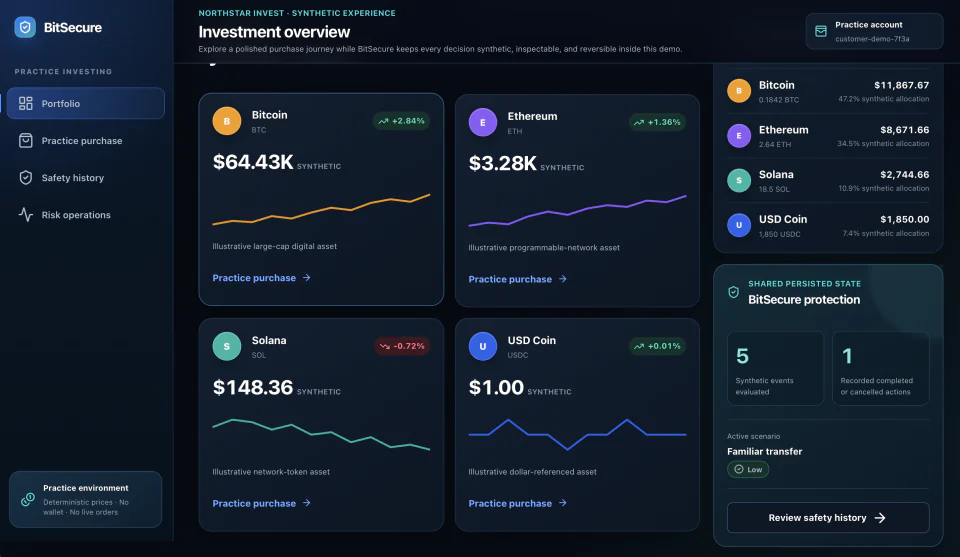
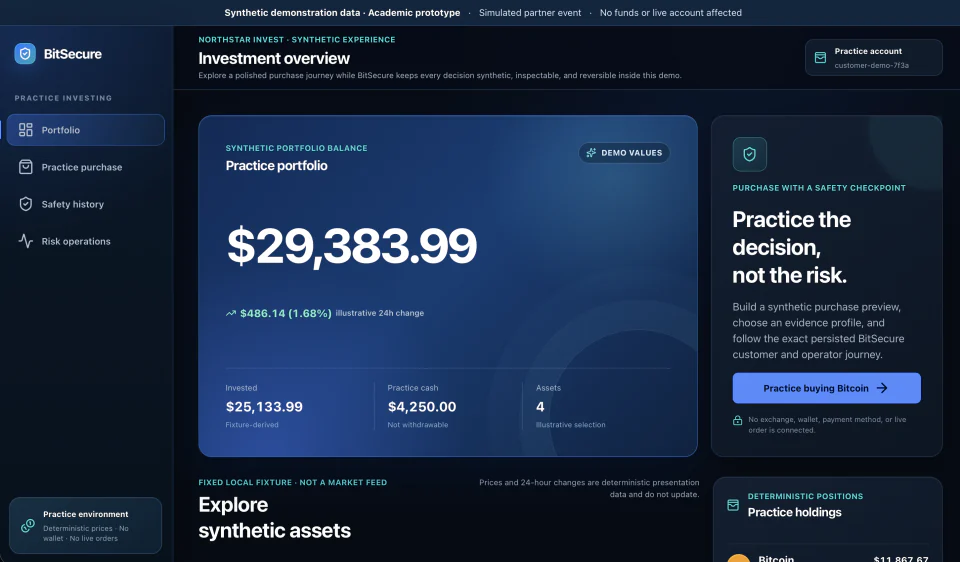
- The prototype presents a practice investment journey alongside risk-event triage, policy views, safety history, and a decision trace using synthetic scenarios.
- The product pack defines the initial transfer workflow, actors, event and decision schemas, failure behavior, privacy boundaries, release gates, and a stage-gated validation plan.
- Every published screen labels the experience as synthetic or academic and avoids presenting demo balances, scores, events, or outcomes as live customer evidence.
Lessons
What carries into the next system.
- Security friction becomes more useful when the product explains the reason, preserves user agency, separates observed facts from uncertainty, and records the final decision without taking custody or execution authority.