Product and technical portfolio

Product judgment made tangible through strategy, prototypes, and technical evidence.

BitSecure leads the portfolio with a Cornell academic prototype. Five reconstructed cybersecurity bootcamp labs follow in sequence, with Reconductor closing the page as a current safety-first security build.

Featured showcase project

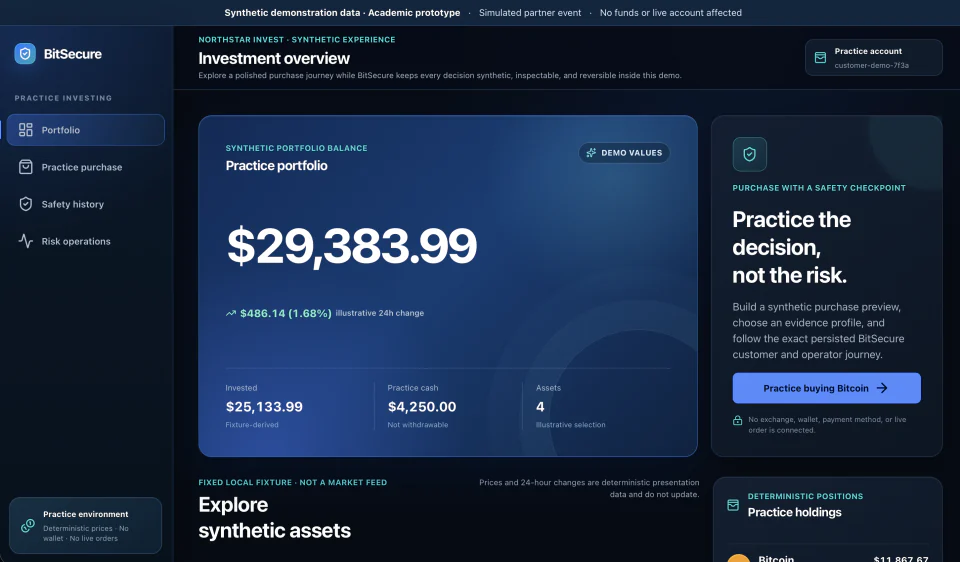
BitSecure makes high-consequence digital-asset decisions explainable.

A Cornell product strategy and synthetic prototype for turning approved context into proportionate pre-transaction choices.

ASU Cybersecurity Boot Camp · 2020

Five reconstructed labs, presented as individual projects in sequence.

These published labs are reconstructions of projects originally completed during the ASU Cybersecurity Boot Camp in 2020. The current code, datasets, screenshots, and reports were rebuilt for the portfolio; they are not untouched copies of the original submissions.

  1. Cyber Range Red/Blue Lab

    Controlled web telemetry, detections, investigation, hardening, and retest

    Inspectable evidence

    Controlled local target with deterministic events and rule-linked alerts
    View project
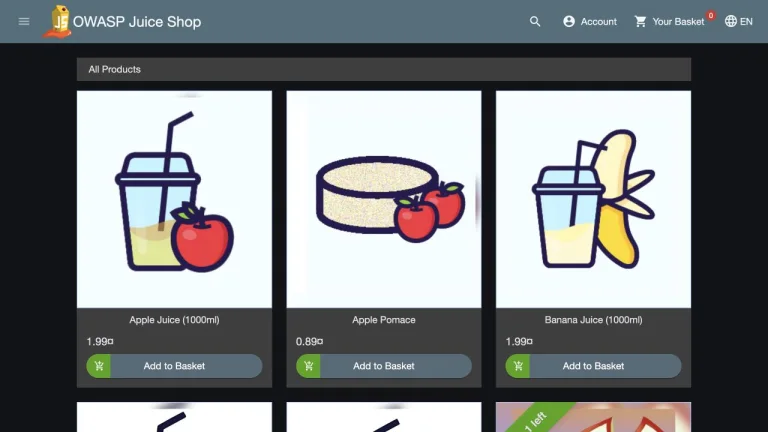
    OWASP Juice Shop storefront showing Apple Juice, Apple Pomace, and Banana Juice products in the reconstructed cyber-range target.
    OWASP Juice Shop is the deliberately vulnerable local web target used to generate controlled activity inside the reconstructed range.
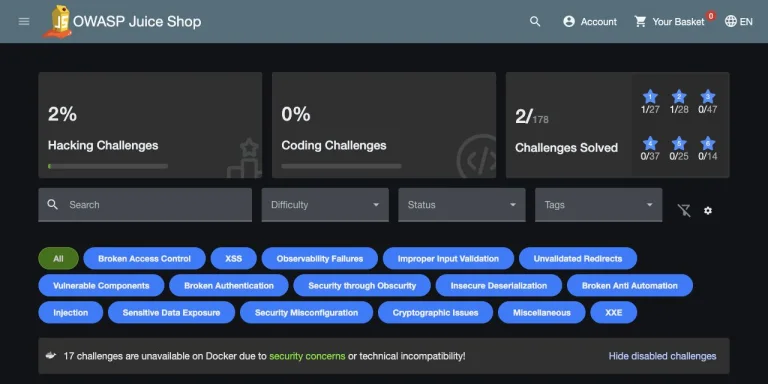
    OWASP Juice Shop challenge scoreboard showing two of 178 challenges solved and filters for vulnerability categories.
    The challenge scoreboard records the target state used during the local exercise and organizes vulnerability categories for review.
  2. SOC Alert Dashboard

    Detection definitions, alert queue, evidence detail, and incident summary

    Inspectable evidence

    Seven rules evaluated against a fixed synthetic dataset
    View project
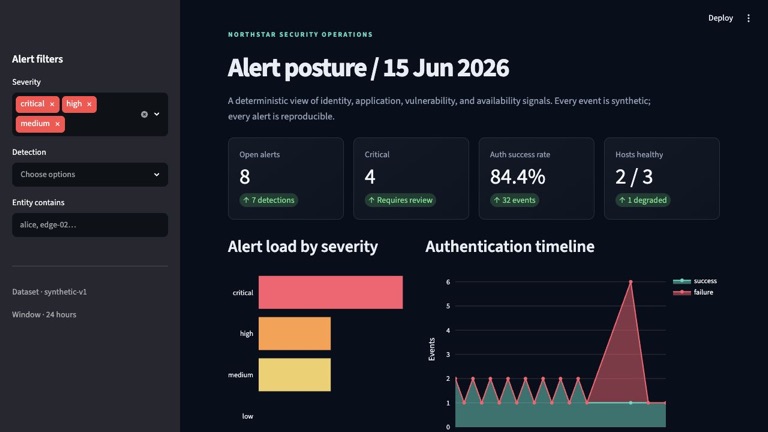
    Security operations dashboard showing synthetic alert posture metrics, severity distribution, and authentication activity.
    This current lab uses a fixed synthetic dataset to revisit the SOC analysis practiced in the original bootcamp project.
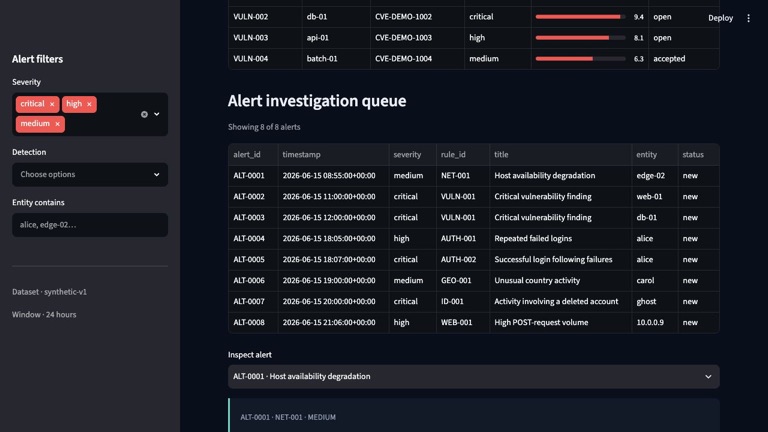
    Security operations alert investigation queue listing eight synthetic alerts with severity, rule, entity, and status.
    The investigation queue ties each synthetic alert to its rule, entity, timestamp, status, and supporting detail.
  3. Network Packet Analysis

    DNS, ARP, HTTP, connection, ICMP, and UDP observations

    Inspectable evidence

    Portable reports with source frame references
    View project
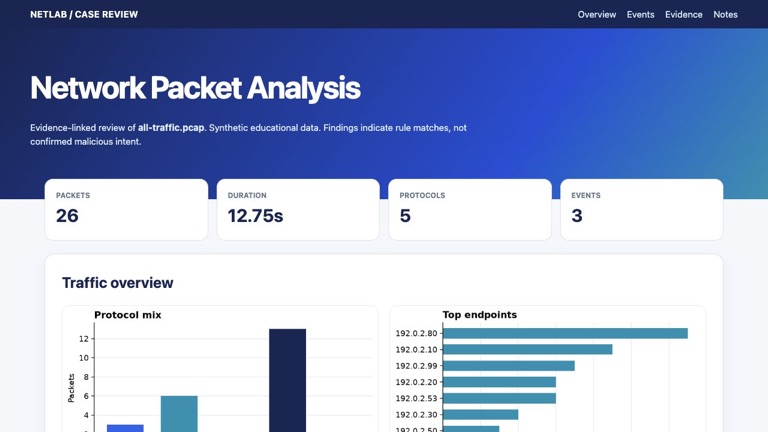
    Network packet analysis report showing a synthetic capture summary and traffic charts.
    The packet report keeps observations tied to supporting frame numbers in a synthetic capture.
  4. Web Security Fundamentals

    Authentication, authorization, CSRF, data scope, and browser controls

    Inspectable evidence

    Visible control status plus tests and HTTP probes
    View project
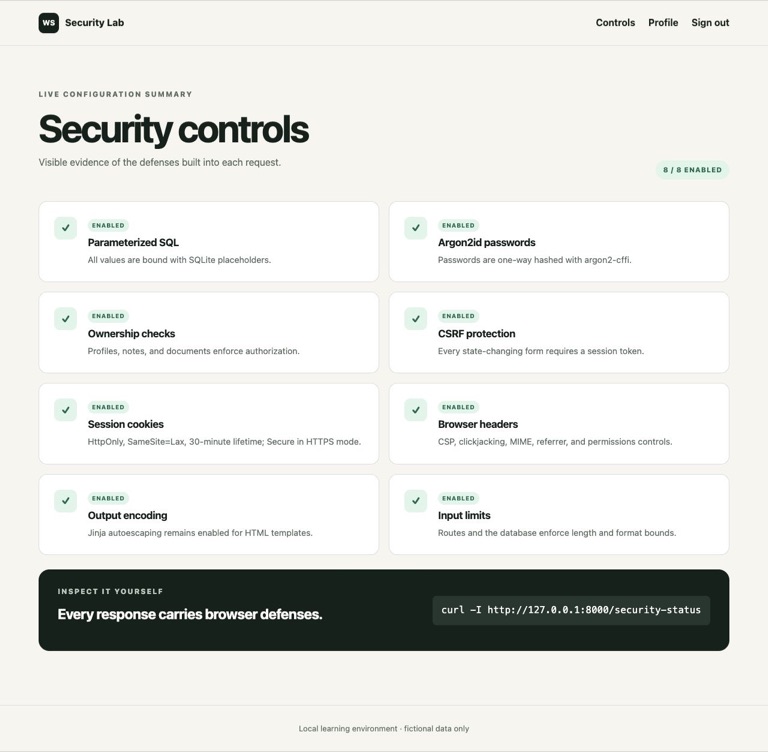
    Web security status page showing eight enabled application controls.
    The secure-development lab makes authorization, CSRF, password, cookie, header, encoding, and input controls visible.
  5. Azure Security Monitoring

    Local-to-cloud service, logging, monitoring, and infrastructure model

    Inspectable evidence

    Local architecture with optional, non-applied Azure infrastructure code
    View project
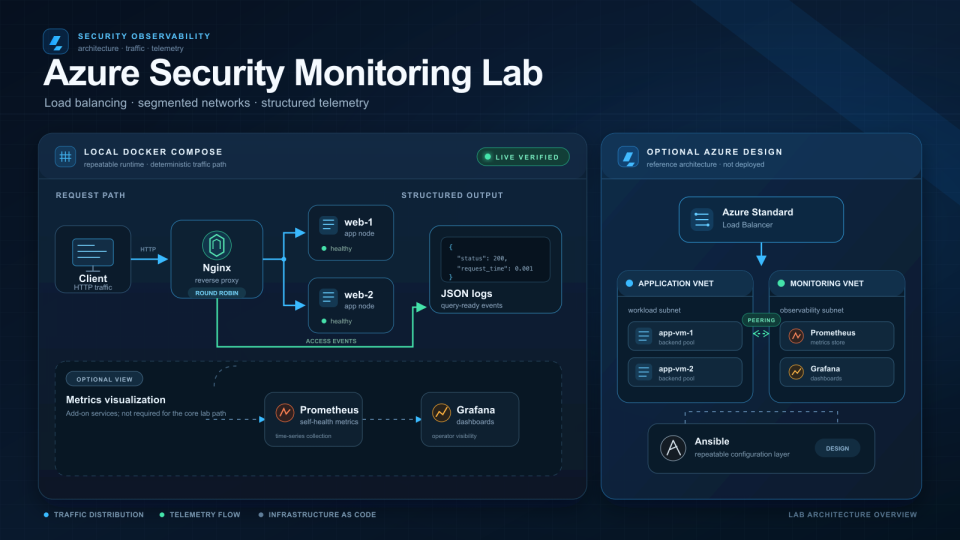
    Architecture overview contrasting a locally verified Docker Compose path through Nginx and two web containers with an optional, non-deployed Azure reference design.
    The architecture separates the verified local Docker Compose path from the optional Azure reference design, which was not deployed.
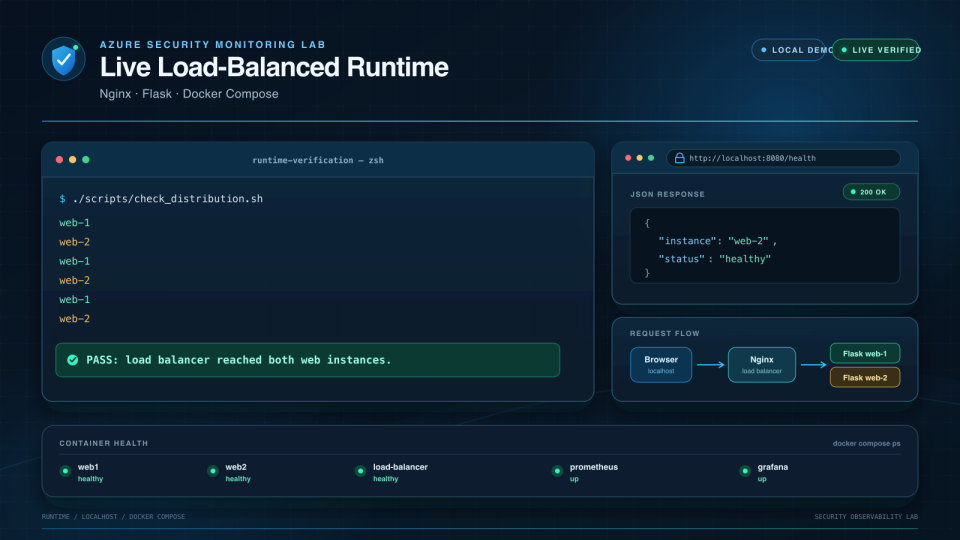
    Local Docker Compose verification showing Nginx alternating health checks between Flask web-1 and web-2, with the lab containers reported healthy or up.
    A local verification run reached both Flask instances behind Nginx and recorded the container health shown here.
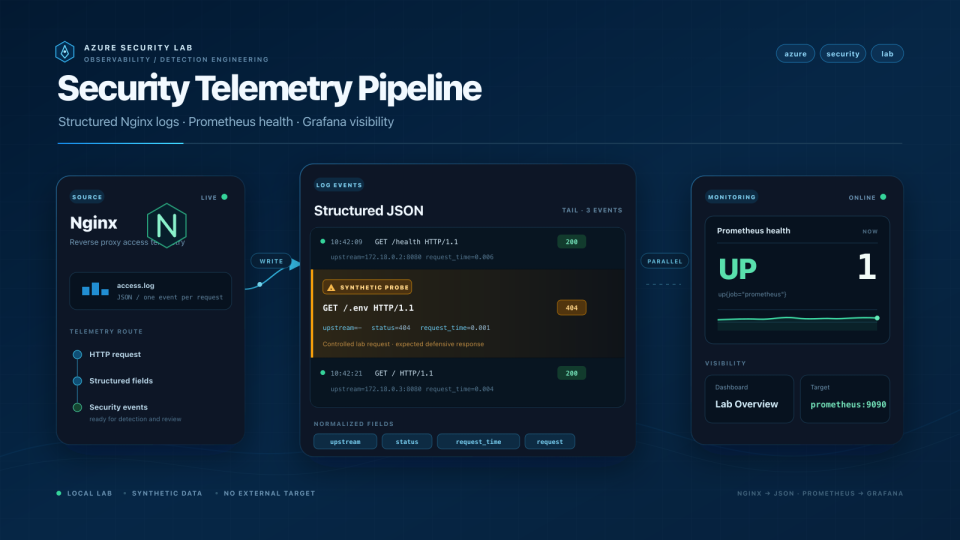
    Local security telemetry diagram showing structured Nginx logs, a synthetic request returning 404, and Prometheus health and dashboard visibility.
    The local lab records structured Nginx events from synthetic probes and exposes Prometheus health for review.

Security engineering

Reconductor closes the portfolio with a safety-first reconnaissance copilot.

The project makes authorization, scope, typed actions, evidence provenance, and human approval visible in the product architecture.
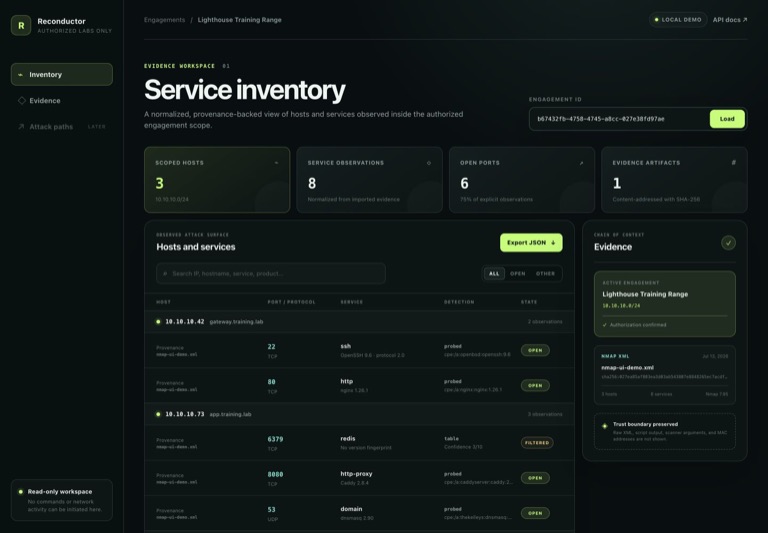
Reconductor read-only service inventory showing synthetic scoped hosts, normalized services, and evidence provenance.
The read-only workspace keeps scope, observations, and artifact provenance in the same review surface. All displayed data is synthetic.
Security engineeringActive development

Reconductor

A safety-first reconnaissance copilot for authorized labs and CTFs, built around explicit scope, typed actions, human approval, evidence provenance, and a read-only review workspace.

  • Python
  • FastAPI
  • React
  • SQLite

How to read the portfolio

Evaluate the judgment behind the implementation.

Each case begins with who needs to decide what. Architecture, controls, screenshots, and tests are useful only when they make that decision safer or clearer.

  1. User and problem

    Who the system serves and what breaks in the current workflow.

  2. Product decision

    The boundary or tradeoff that shaped the implementation.

  3. Working artifact

    The interface, workflow, or output that makes the design tangible.