The problem
Why this needed to exist.
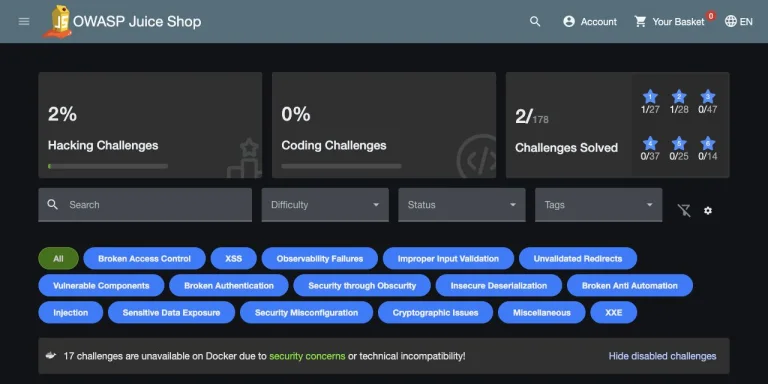
Security labs often demonstrate an attack or a dashboard in isolation. This project keeps the target, ingress, telemetry, detections, investigation evidence, and remediation retest in one reproducible boundary.
Defining decision
Keep the target, ingress, telemetry, detections, investigation evidence, and retest inside one bounded local environment.
Approach
How the system was shaped.
- Restricted all scenario traffic to repository-created containers and removed configurable public targets.
- Mapped deterministic events to local detection rules and linked the resulting alerts to analyst queries, a timeline, and technical and executive reports.
- Reused identical inputs after gateway and container hardening so the retest remained comparable.
Tradeoffs
What the design chooses—and gives up.
- A single-node local environment is portable and auditable but does not model production-scale telemetry.
- Synthetic control events support deterministic testing without claiming real identity-plane coverage.
Evidence
What can be inspected.
- The documented private-lab run produces nineteen local events and verifies eight alerts across four rules.
- The range includes repeatable setup, health, detection, investigation, hardening, retest, and release-audit workflows.
Lessons
What carries into the next system.
- Detection practice becomes more reviewable when event generation, rule logic, investigation evidence, and retest stay in the same controlled workflow.